

A Complete Outdoor Living Investment Guide
If you’re researching patio costs in the La Crosse, Wisconsin area, you’ve probably noticed something frustrating:
Very few companies list real numbers.
And when they do, the ranges are all over the place.
Some say $8,000.
Some say $15,000.
Others say $60,000+.
So what’s real?
If you’re looking at a professionally built, long-lasting outdoor living space in the Coulee Region, most projects start around $25,000 and increase based on complexity, size, and features.
Let’s break down why — and what actually determines patio cost in our area.
Average Paver Patio Cost in La Crosse, WI
In 2026, here’s what homeowners in La Crosse and surrounding communities typically invest:
Small patio (simple layout, no walls): $25,000–$35,000
Mid-size patio with steps or seat walls: $35,000–$55,000
Multi-level patio with retaining walls: $50,000–$75,000
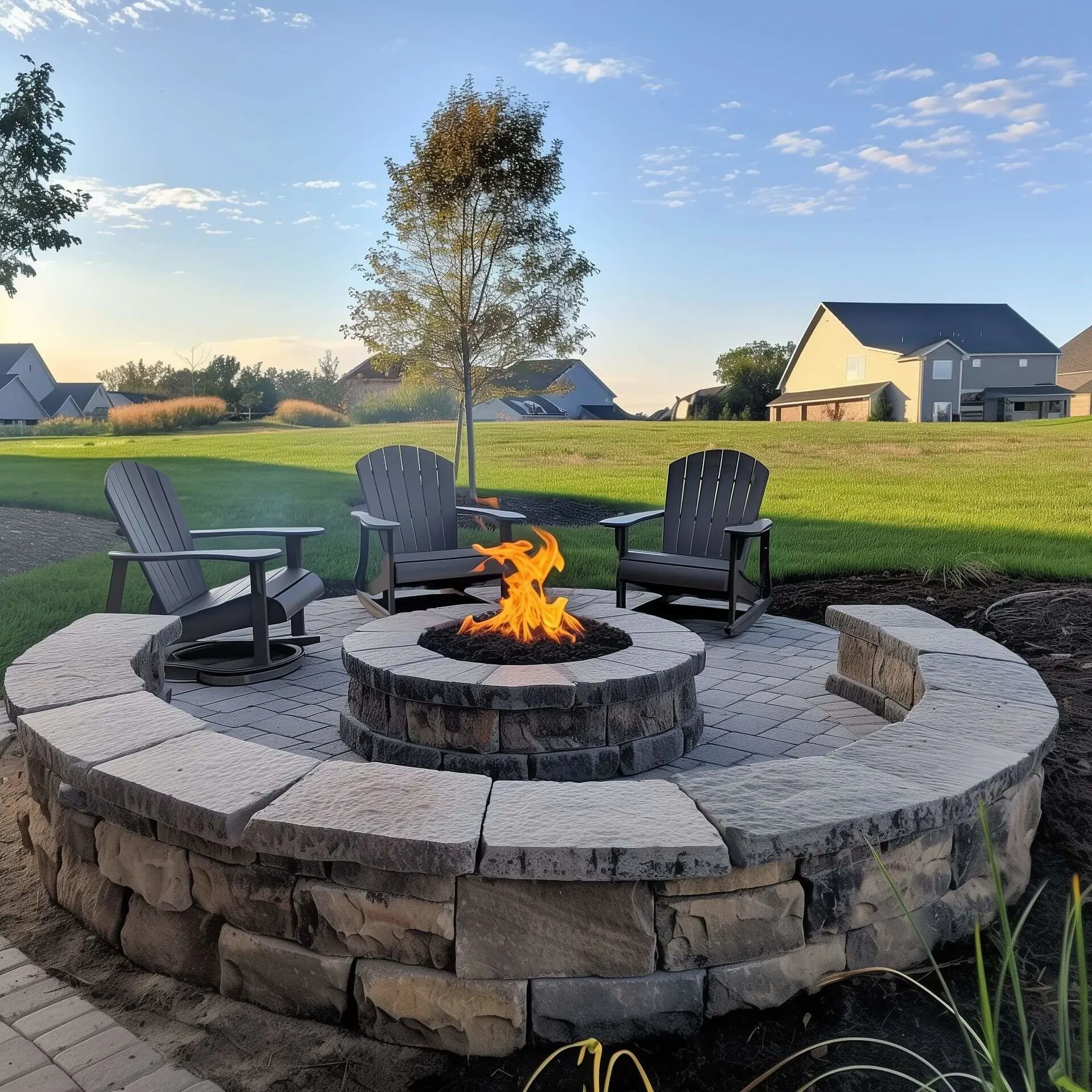
Full outdoor living space (fireplace, kitchen, lighting, walls): $60,000–$120,000+
These numbers reflect professionally engineered installations designed to handle Wisconsin’s freeze/thaw cycles — not basic flatwork or minimal prep installs.
Now let’s look at what drives those numbers.
The 7 Biggest Factors That Affect Patio Cost in La Crosse
1. Excavation & Base Preparation (The Most Important Factor)
In Wisconsin, the ground moves.
We deal with:
Freeze/thaw cycles
Expansive soils
Heavy rainfall
Spring melt
A patio is not simply pavers placed on dirt.
A properly installed paver patio includes:
Full excavation of unsuitable soil
6–8 inches (or more) of compacted aggregate base
Proper slope for drainage
Bedding layer
Edge restraint system
Skipping base depth is the #1 reason patios sink or shift.
Lower-cost installs often reduce base material or skip proper compaction. It looks fine for a year or two — then problems start.
When installed correctly, a paver patio can last 25+ years.
That foundation work is where much of the investment goes.
2. Drainage Planning & Water Management
Water is the enemy of hardscapes.
In La Crosse, we frequently see:
Downspouts draining into patio areas
Sloped properties pushing water toward foundations
Retaining walls trapping moisture
A quality patio installation accounts for:
Surface water flow
Base drainage
Wall drainage (if applicable)
Proper grading away from the home
Drainage is invisible when done right — but catastrophic when done wrong.
3. Sloped Yards & Elevation Changes
The Coulee Region is known for hills.
That means many properties require:
Retaining walls
Geogrid reinforcement
Steps
Multi-level layouts
A flat backyard costs significantly less than a hillside build.
When elevation changes are involved, projects become structural — not just decorative.
Retaining walls must be engineered to hold back soil and manage hydrostatic pressure. That adds material, labor, and design planning.
But it also creates usable space where none existed before.
4. Access to the Backyard
Access dramatically affects labor and equipment use.
Questions we evaluate during consultations:
Can a skid steer reach the backyard?
Is there a narrow gate?
Are we hauling materials by hand?
Is there a septic system or utilities to navigate?
Limited access increases:
Labor time
Project duration
Equipment coordination
Two identical patios can have very different price points depending on access.
5. Material Selection
Material choice affects both aesthetics and cost.
Homeowners often compare:
Concrete pavers
Poured concrete
Natural stone
In Wisconsin’s climate, pavers are often preferred because they:
Flex with freeze/thaw cycles
Resist cracking
Are repairable
Offer design flexibility
Higher-end paver systems, specialty textures, or large-format slabs increase cost — but also elevate appearance and longevity.
Material upgrades are where personalization happens.
6. Features & Upgrades
A patio becomes an outdoor living space when features are added.
Common upgrades include:
Seat walls
Fire pits
Fireplaces
Outdoor kitchens
Integrated lighting
Privacy walls
Pergolas
Each feature adds both cost and lifestyle value.
For example:
A fire pit adds ambiance.
A fireplace adds vertical presence and architectural impact.
An outdoor kitchen turns your patio into an entertainment hub.
The more integrated the features, the more the project moves from “patio” to “outdoor living room.”
7. Design & Project Planning
Design-build planning impacts cost — and long-term satisfaction.
A thoughtful layout considers:
Traffic flow
Furniture placement
Sight lines
Sun exposure
Future additions
Without design planning, projects can feel disconnected or cramped.
When homeowners invest $40K–$80K+, they want intentional design — not random square footage.
Why Do Professional Patio Projects Start Around $25K?
Because quality outdoor living construction involves:
Excavation equipment
Skilled labor
Base materials
Drainage planning
Professional installation standards
Warranty coverage
Lower price points often mean:
Minimal excavation
Thin base layers
No drainage planning
Short-term performance
A patio built correctly in Wisconsin requires structure beneath the surface.
That’s what determines longevity.
Is a Paver Patio Worth the Investment?
For many La Crosse homeowners, the answer is yes — especially when the project is thoughtfully designed.
Outdoor living spaces:
Extend usable square footage
Create gathering areas
Increase property appeal
Improve everyday living
When built well, a patio becomes one of the most used areas of the home during spring, summer, and fall.
It’s not just an aesthetic improvement — it’s a lifestyle upgrade.
What Does a $50K Outdoor Living Space Include?
At this investment level, homeowners often receive:
Professionally installed paver patio
Integrated retaining walls
Multiple elevations
Feature elements (fire feature or lighting)
Thoughtful design layout
Projects at this level feel cohesive and purposeful — not pieced together.
Planning Your Outdoor Living Project in La Crosse
If you’re considering building in 2026, here’s what we recommend:
Start Planning in Winter
Design and scheduling happen before installation season begins.
Book Early
Spring schedules fill quickly in the Coulee Region.
Prioritize Structure Over Aesthetics
The base and drainage matter more than surface appearance.
Work With a Design-Build Contractor
Integrated planning avoids costly revisions later.
Final Thoughts: Investing in Quality
In Wisconsin, patios must survive:
Freeze/thaw cycles
Heavy rainfall
Soil movement
Seasonal temperature swings
Quality construction isn’t optional — it’s required for longevity.
When evaluating patio costs in La Crosse, focus less on lowest price and more on:
Installation standards
Experience
Drainage knowledge
Warranty coverage
The difference between a 3-year patio and a 25-year patio is almost always beneath the surface.
Ready to Start Planning?
If you’re considering a paver patio or outdoor living space in La Crosse or the surrounding Coulee Region, the best next step is a brief phone consultation.
During this call, we’ll:
Learn more about your property
Talk through your vision
Discuss rough investment ranges
Determine whether we’re the right fit for your project
We focus on professionally built outdoor living spaces starting around $25K, designed to last in Wisconsin’s climate.
If that aligns with what you’re looking for, we’d love to connect!
Schedule your phone consultation here.